Soft Tissue Release (STR) Physiotherapy
Release Tension, Restore Movement
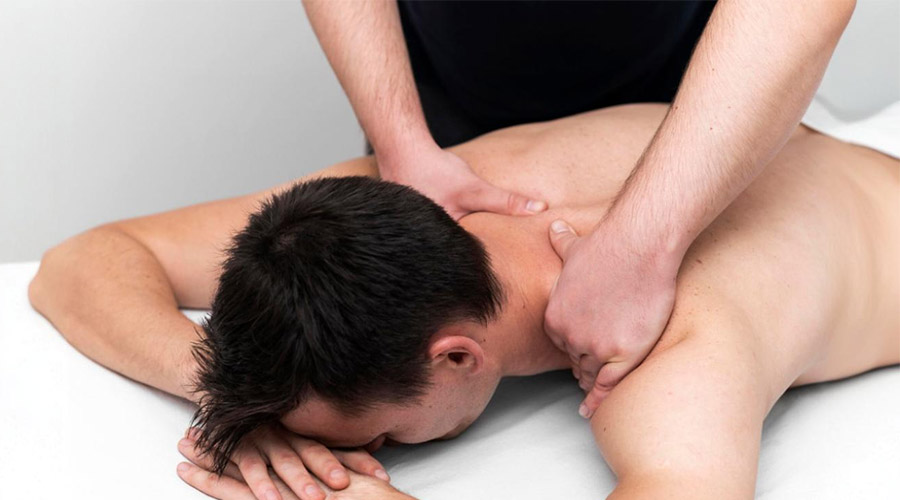
Soft Tissue Release (STR) is a hands-on manual therapy that targets muscles, tendons, ligaments, and fascia (the stretchy connective tissue around muscles). Overuse or injury can cause these soft tissues to develop knots or scar “adhesions,” making them tight and painful. STR techniques use firm pressure and gentle stretching to untangle these tight fibers and restore normal muscle length. At Atmiya Clinic, our expert physiotherapists apply STR as part of our personalized, holistic approach, easing tight muscles and reducing pain.
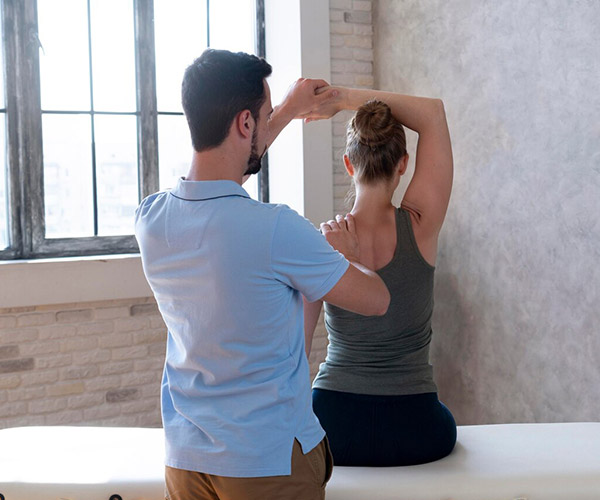
Fascia is the thin “web” of tissue wrapping around every muscle and organ in the body. Healthy fascia is flexible and slides smoothly, but when it tightens it can restrict movement and cause pain. STR works on fascia just like it does on muscle – by applying pressure and movement to help that tissue relax. In practice, a trained therapist will feel for tight bands or tender spots with their hands, then apply firm pressure and gently stretch that precise spot. Over a session, this can break up adhesions (scar tissue) and help the muscle and fascia return to normal length and function.
How it works
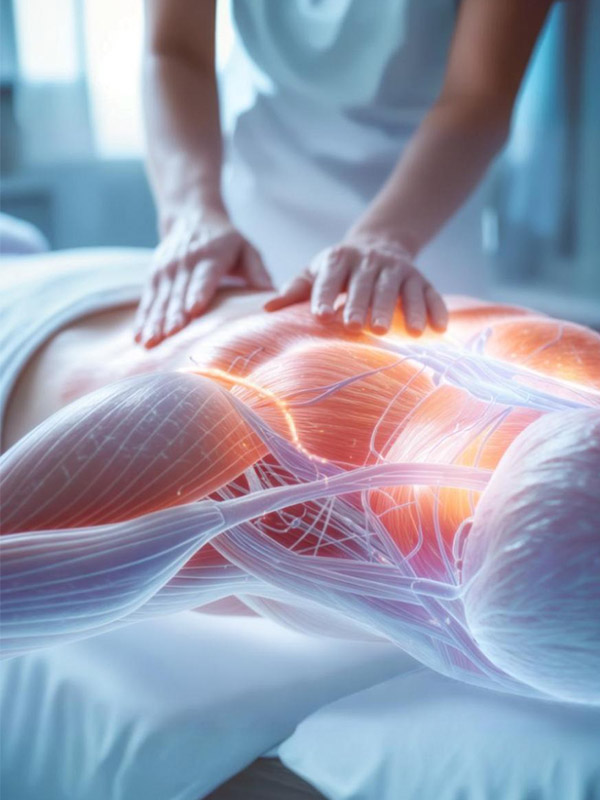
During an STR session at Atmiya, our expert physiotherapists typically follow these steps:
- Find the tight spot: The therapist locates the tight or tender area in your muscle by touch.
- Lock the muscle: One hand anchors (or “locks”) one end of the muscle, often over a bone or joint, to hold it still.
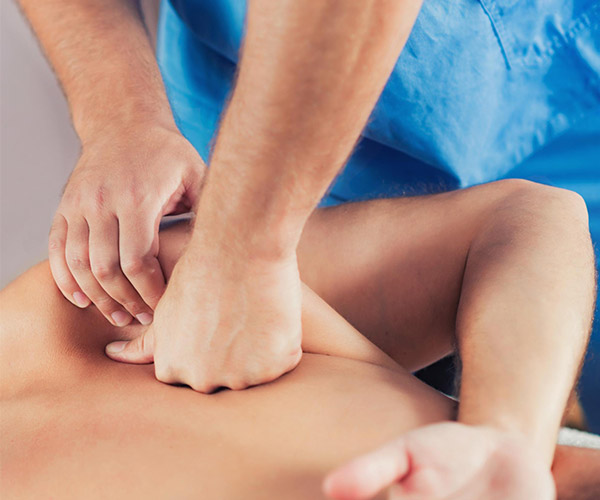
- Apply pressure: The other hand applies firm pressure to the muscle belly at the tight spot.
- Stretch: With the pressure in place, the therapist slowly stretches the muscle in the direction of its fibers. You may help by moving slightly or by relaxing into the stretch.
- Repeat as needed: The therapist may repeat this press-and-stretch cycle along the length of the muscle. Each pass helps break up tight bands and improve circulation.
Throughout the session, our therapists use this gentle press-and-stretch technique to elongate, untangle, and rearrange muscle fibers. As the restrictions break down, the muscle can relax back to its normal length, improving mobility and blood flow.
Useful To Treat
STR can help many common muscle and tendon problems, especially those involving tight, overworked, or scarred tissue. Examples include:
- Muscle strains and overuse: Pulled or tight muscles (e.g. hamstrings, calves, quads, shoulders) that feel “knotted” after activity often benefit from STR
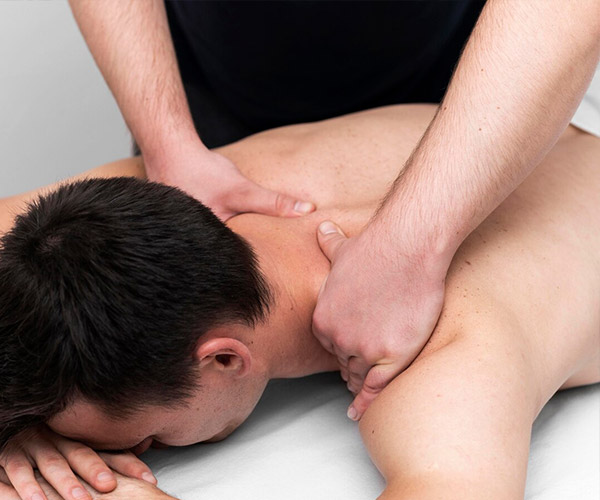
- Neck or back tightness: Chronic tension in the neck, shoulders, or low back (for example from posture or stress) can be eased by releasing the tight muscles there.
- Tendon pain (tendinitis): Conditions like tennis elbow or golfer’s elbow (pain in the forearm) and Achilles or patellar tendinitis often respond well to STR.
- Plantar fasciitis: Heel or arch pain from a tight plantar fascia can improve when the calf and foot muscles are treated, reducing pressure on the inflamed area.
- Sciatica or nerve entrapment: Tight muscles in the hip or buttock can pinch nerves (like the sciatic nerve). Releasing those muscles with STR can lessen shooting nerve pains.
- Repetitive stress injuries: Injuries from repetitive motions (e.g. carpal tunnel syndrome, shoulder bursitis, tendonitis from overuse) often involve tight forearm, shoulder, or neck muscles, where STR can help.
- Postural problems: Muscle imbalances from poor posture (rounded shoulders, forward neck) can be relieved by STR in tight chest, back, or neck muscles.
At Atmiya Physiotherapy & Rehabilitation Clinic, we treat people of all ages and activity levels. Any activity that strains muscles or ligaments can benefit from our personalized, expert soft tissue physiotherapy.
Benefits
Patients usually notice several positive effects from STR therapy
- Reduced pain and tension: By loosening tight fibers and scarred spots, STR often brings quick relief from muscle aches and stiffness. It directly targets the knots that cause pain
- Greater flexibility and range of motion: Untangling the fibers lets the muscle lengthen properly, so joints move more freely. You may notice you can stretch or reach further after treatment.
- Improved circulation: The pressure and movement in STR increases blood flow to the area. More oxygen and nutrients get to the muscle, which helps healing and reduces inflammation.
- Breakup of adhesions: STR specifically targets adhesions (scar tissue) in muscles and fascia. Over time, this can improve muscle quality and prevent chronic tightness.
- Better muscle function: Many patients find their muscles feel more coordinated and balanced after STR. When tight spots are released, nerves and muscles can send signals more normally, improving strength and control.
- Improved posture and balance: By realigning muscle fibers and relieving chronic tightness, STR can help correct posture. Freed-up muscles hold joints in better positions (e.g. a straighter spine or relaxed shoulders), making day-to-day movement easier and more comfortable.
- Personalized care: Each STR session at Atmiya is customized to your needs by our expert therapists, ensuring a holistic approach to your recovery.
Soft Tissue Release (STR) not only eases current pain but also helps prevent future problems. Freer muscles and better circulation speed recovery from injuries, and many people simply feel looser and more relaxed after a session.
Potential Risks
STR is generally very safe when performed by a qualified therapist, but like any therapy it has a few mild side effects or limitations:
- Temporary soreness: It’s common to feel some muscle ache or fatigue after STR, much like the soreness after a workout. This usually fades in a day or two.
- Tenderness or bruising: Deep pressure can occasionally cause light bruising or redness where the tissue was very tight. The area might feel tender (even bruise-like) briefly, but this goes away quickly.
- Discomfort during treatment: If a muscle is extremely tight, you might feel a pinch or stretch during STR. Our therapists always work within your comfort level, so you should tell them to ease off if it hurts.
- Not for acute injuries: STR is usually avoided on newly injured or highly inflamed areas. For example, if you have a very recent sprain, severe swelling, or an open wound, we skip STR until it’s safe. Always let the therapist know about any recent injuries or conditions.
- Used alongside other treatments: STR alone may not solve every problem. Some conditions need strengthening exercises, posture changes, or other therapies in addition to soft tissue work.
Overall, STR is very safe and effective when used appropriately. Our expert physiotherapists monitor your comfort closely and adjust techniques as needed. We progress your therapy gently to prevent overexertion. Serious complications are highly unlikely, and any discomfort is minimized by our personalized, experienced care.